


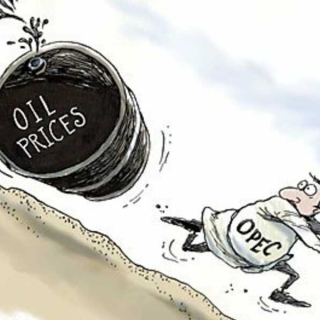
Oil prices fell on Tuesday as traders bet that talks over a possible agreement to legitimize or end Russia's invasion of Ukraine could ease sanctions on Russian crude oil, boosting global supply.
Brent crude futures settled at $65.79 a barrel, down 81 cents, or 1.22%. U.S. West Texas Intermediate crude futures for September delivery, set to expire on Wednesday, finished at $62.35 a barrel, down $1.07, or 1.69%.
"Even with this peace dividend, we have a record short position," said Phil Flynn, senior analyst with Price Futures Group. "Because of the size of the short position, people are betting on a cease-fire and if we don't get one there could be a bounce."
Following a White House meeting on Monday with Ukrainian President Volodymyr Zelenskiy and European allies, U.S. President Donald Trump announced in a social media post that he had spoken with Russian President Vladimir Putin.
Trump said arrangements were being made for a meeting between Putin and Zelenskiy, which could lead to a trilateral summit involving all three leaders.
Suvro Sarkar, lead energy analyst at DBS Bank, said Trump's softened stance on secondary sanctions targeting importers of Russian oil had reduced the risk of global supply disruptions, easing geopolitical tensions slightly.
Chinese refineries have purchased 15 cargoes of Russian oil for October and November delivery as Indian demand for Moscow's exports has fallen away, two analysts and one trader said on Tuesday.
Zelenskiy described his talks with Trump as "very good" and noted discussions about potential U.S. security guarantees for Ukraine. Trump confirmed the U.S. would provide such guarantees, though the extent of support remains unclear.
Trump has pressed for a quick end to Europe's deadliest war in 80 years, but Kyiv and its allies worry he could seek to force an agreement on Russia's terms.
"An outcome which would see a ratcheting down of tensions and remove threats of secondary tariffs or sanctions would see oil drift lower toward our $58 per barrel Q4-25/Q1-26 average target," Bart Melek, head of commodity strategy at TD Securities, said in a note.
Source: Investing.com
Oil prices stabilized on Thursday (February 12th), as the market reassigned a risk premium to US-Iran tensions despite US inventory data showing swelling domestic supplies. This movement confirms one ...
Oil prices rose on Wednesday (February 11th), supported by a combination of geopolitical risk premiums from US-Iran tensions and more solid Asian demand signals particularly from India which helped ea...
Oil remained in the green zone on Tuesday (February 10th), as the market refused to abandon the Middle East risk premium. As of 13:07 GMT (20:07 WIB), Brent rose +0.4% to $69.32/barrel, while WTI rose...
Oil prices fell about 1% on Monday as concerns about conflict in the Middle East eased slightly. The market calmed after the US and Iran agreed to resume talks on Tehran's nuclear program, reducing fe...
Oil prices moved slightly higher in a volatile session on Friday, as investors assessed the direction of nuclear negotiations between the United States and Iran. Price movements appeared sensitive to ...
Oil prices stabilized on Thursday (February 12th), as the market reassigned a risk premium to US-Iran tensions despite US inventory data showing swelling domestic supplies. This movement confirms one thing: geopolitical headlines are still more...
Gold prices weakened slightly on Thursday (February 12th), as more solid US employment data reduced market confidence in an imminent Federal Reserve interest rate cut. The strong employment data prompted market participants to shift expectations of...
The Hang Seng Index reversed its downward trend in Hong Kong on Thursday (February 12th), weakening by around 0.9% to around 27,000 after a strong session earlier. This decline halted the momentum of the short term rally, as investors began to...